
How to Choose the Right Swim School for Your Child
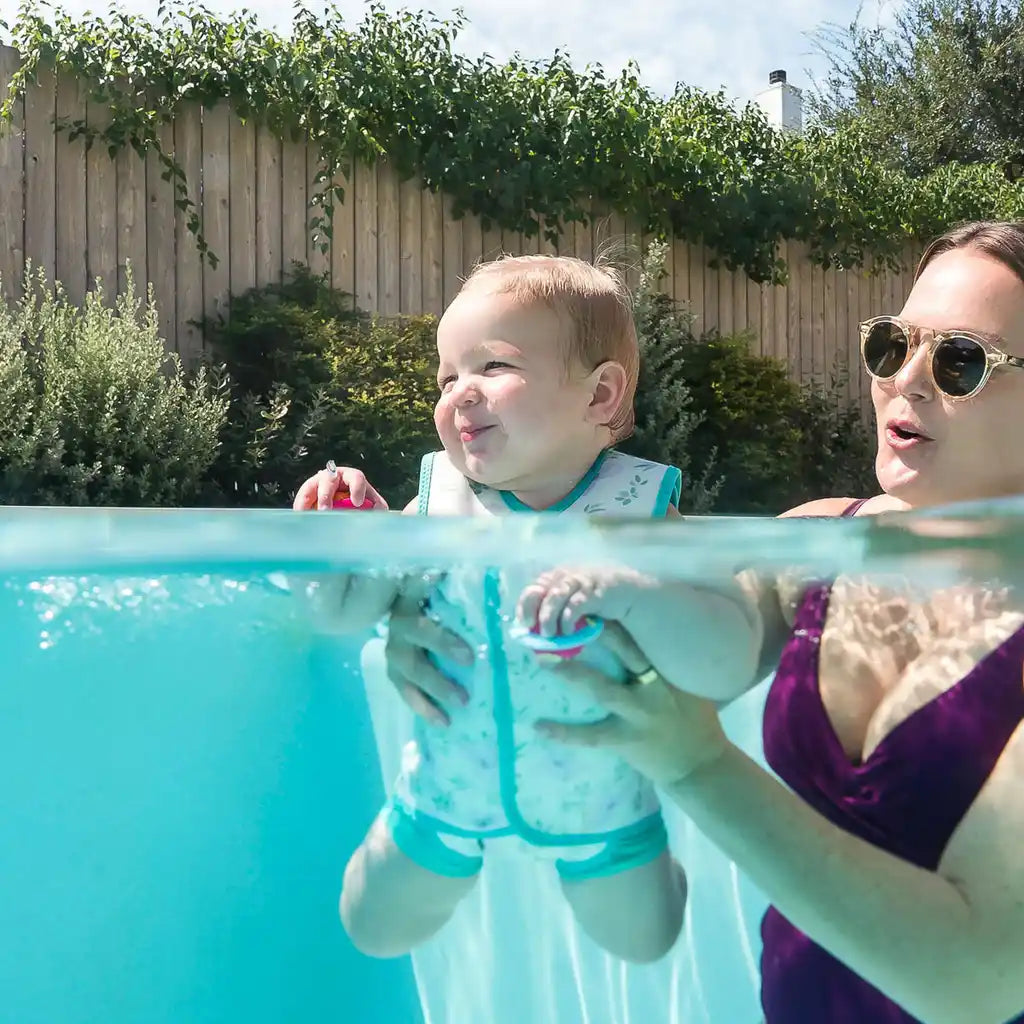
The right swim school for your child is one where the teaching matches their age and confidence. The pool meets clear safety standards, and the class fits your routine well enough that you'll actually keep going. Take your time with this one: watching a class before you book tells you more than any website ever could, because you can see the ratio of teachers to children and watch how a nervous child gets handled in real time. Our learn to swim aids are designed for exactly this stage, from first sessions in a float jacket through to independent stroke work, so knowing what a good class looks like helps you pick the right kit too.
Choosing a swim school is a bigger decision than it looks from the outside, and it's completely normal to feel unsure where to start. This guide draws on our experience making swim aids and swimwear for UK baby and toddler swim lessons, and it's here to help you compare your local options with a bit more confidence. It isn't a substitute for visiting a pool, meeting the instructors or checking a school's own safeguarding and safety policies directly.
- A swim school's teaching approach is the first thing to check. It shapes how quickly a nervous child settles into the water.
- Class size is one of the clearest signs of how much attention your child will get.
- A well run pool is one you can check on paper, not just by feel.
- A swim nappy isn't optional at most UK baby and toddler swim schools.
- A trial lesson is worth booking before you commit to a term.
- The best questions are the ones a good school answers without hesitation.
- What drives the cost of lessons is rarely the swimming itself.
- What Should You Look for in a Swim School's Teaching Approach?
- Is Class Size a Reliable Guide to Teaching Quality?
- What Safety Standards Should a Good Swim School Meet?
- Do Swim Schools Require a Swim Nappy?
- Is a Trial Lesson Worth Booking Before You Commit?
- What Questions Should You Ask Before Signing Up?
- What Affects the Cost of Swimming Lessons?
What Should You Look for in a Swim School's Teaching Approach?
It's easy to get swept up in a polished website or a friendly first impression, but the teaching approach is what actually shapes your child's experience week to week. A swim school's teaching approach makes the difference between a class your child tolerates and one they ask to go back to. Look for a structured level system with clear goals for each stage. Be wary of a vague promise that children "progress at their own pace" with nothing written down.
Ask how progress gets communicated. Some schools hand you a written report each term. Others simply tell you at poolside. Neither approach is wrong. Just know which one you're getting before you pay for a block of lessons.

Patience matters more than pace for babies and toddlers, and the small moments show it best. A teacher who lets a crying toddler sit at the pool edge for a minute, rather than pushing them straight into the water, is doing the harder job. It's also the more useful one: a child who trusts the teacher learns faster than one who's simply used to the water. So if a school's marketing leans heavily on speed, "swimming by age two", that's worth a second look rather than a reason to sign up faster.
Is Class Size a Reliable Guide to Teaching Quality?
You're not being fussy for asking about class size, so don't feel awkward pressing for a proper answer. Class size is one of the clearest signs of how much attention your child will get. It's worth asking for the actual ratio, rather than accepting "small classes" as an answer that could mean almost anything.
UK teaching guidance from both Swim England and the STA allows up to twelve parent and child pairs for one teacher in a baby and toddler class, though plenty of well run schools keep their groups smaller than that maximum. Larger ratios can work fine for confident swimmers doing stroke technique without a parent in the water, because they spend more time swimming lengths and need less close support.
Watch a class rather than relying on the number alone. A ratio that sounds generous on paper can still feel crowded, until you see how the teacher actually manages the group. Two teachers sharing a larger group often works better than one teacher stretched thin.
Two teachers sharing a larger group often works better than one teacher stretched thin.
”What Safety Standards Should a Good Swim School Meet?

This part can feel like a lot to check, but it's worth the ten minutes. A well run pool is one you can check on paper. Ask whether instructors hold a recognised UK teaching qualification, such as Swim England or the STA, and whether the school runs full background checks on staff who work with children. Ask, too, what the water temperature and depth are for your child's age group. UK swimming bodies recommend baby pools of at least 30°C, rising to 32°C for babies under three months, because young children lose heat much faster than adults do.
Ask what happens if your child needs the toilet, or has an accident in the pool. The answer tells you more than most of the glossy marketing on a school's website. A school with a clear, straightforward answer has usually thought pool hygiene through properly. One that seems uncomfortable with the question may not have a policy at all.
Do Swim Schools Require a Swim Nappy?
If this is the first you're hearing about swim nappies, you're in good company. A swim nappy isn't optional at most UK baby and toddler swim schools. Most now ask for a double layer system: a disposable or reusable inner nappy worn beneath a neoprene outer one. A standard nappy absorbs pool water, swells and becomes heavy. That's uncomfortable for your baby, and a hygiene risk for everyone else in the water. Several of the UK's largest baby swim school groups run this double layer policy, including Water Babies, Puddle Ducks and Turtle Tots. Our own Happy Nappy™ is designed to work as the outer layer of a system like this.
Check the school's specific policy before your first lesson. Don't assume any reusable nappy will do. Some schools list an approved brand. Turning up with the wrong setup on day one adds needless stress to a first lesson that's already a big step for your child.

Is a Trial Lesson Worth Booking Before You Commit?
A trial lesson is worth booking before you commit to a term. It shows you things a website simply can't: how the teacher talks to a nervous child, how collecting your child at the end of the lesson actually works, and whether the pool feels calm or chaotic. Book the trial at the time you'd usually swim. A Saturday morning class can feel completely different to a Tuesday one, even at the same pool.
Bring your child in exactly what they'd normally wear, swim nappy included, so you get an honest picture. A trial run in borrowed kit tells you less than a proper one does. Not the same thing at all.
What Questions Should You Ask Before Signing Up?
There's no such thing as a silly question when it comes to your child's safety, so ask everything you want to know. The best questions are the ones a good school answers without hesitation. Hesitation itself tells you something. Ask:
What happens if a lesson is missed?
How does the waiting list work when a class is full?
What's the policy on filming other people's children?
How does a child move up a level: by age, by ability or by a formal assessment?
Does the school provide inner nappies, or do you bring your own?
A school that answers plainly, and admits where something's still being worked out, is usually more trustworthy than one with a polished answer for everything.
”What Affects the Cost of Swimming Lessons?
What drives the cost of lessons is rarely the swimming itself. Pool hire, the ratio of teachers to children, and whether a class is one on one, in a small group or a full group, all affect the price you pay. A smaller ratio costs more to run. A school charging a premium for six children in a class over twelve is usually reflecting a real staffing difference, not padding the price.
But ask what's actually included before you compare two schools on price alone. A course with a locker, a certificate at each level and a written progress report is a different thing to one that only covers pool time, even if the headline price looks similar. That's the level of detail worth asking about.
Choosing well now saves a term of unsettled lessons and a reluctant swimmer later, and it sets your child up to actually love the water. We know how much thought goes into a decision like this, and we're always happy to help. Want a hand working out which of our swim aids and Happy Nappy™ range suits the class your child's starting? Get in touch with our team and we'll point you in the right direction.


