
Adjustable Swim Vest
An adjustable swim vest helps older kids keep building confidence in the water. Every child learns to swim at their own pace, and we designed ours for six to 10-year-olds who've outgrown a toddler swim vest but still like a little support.
Which Swim Vest Suits Your Child?
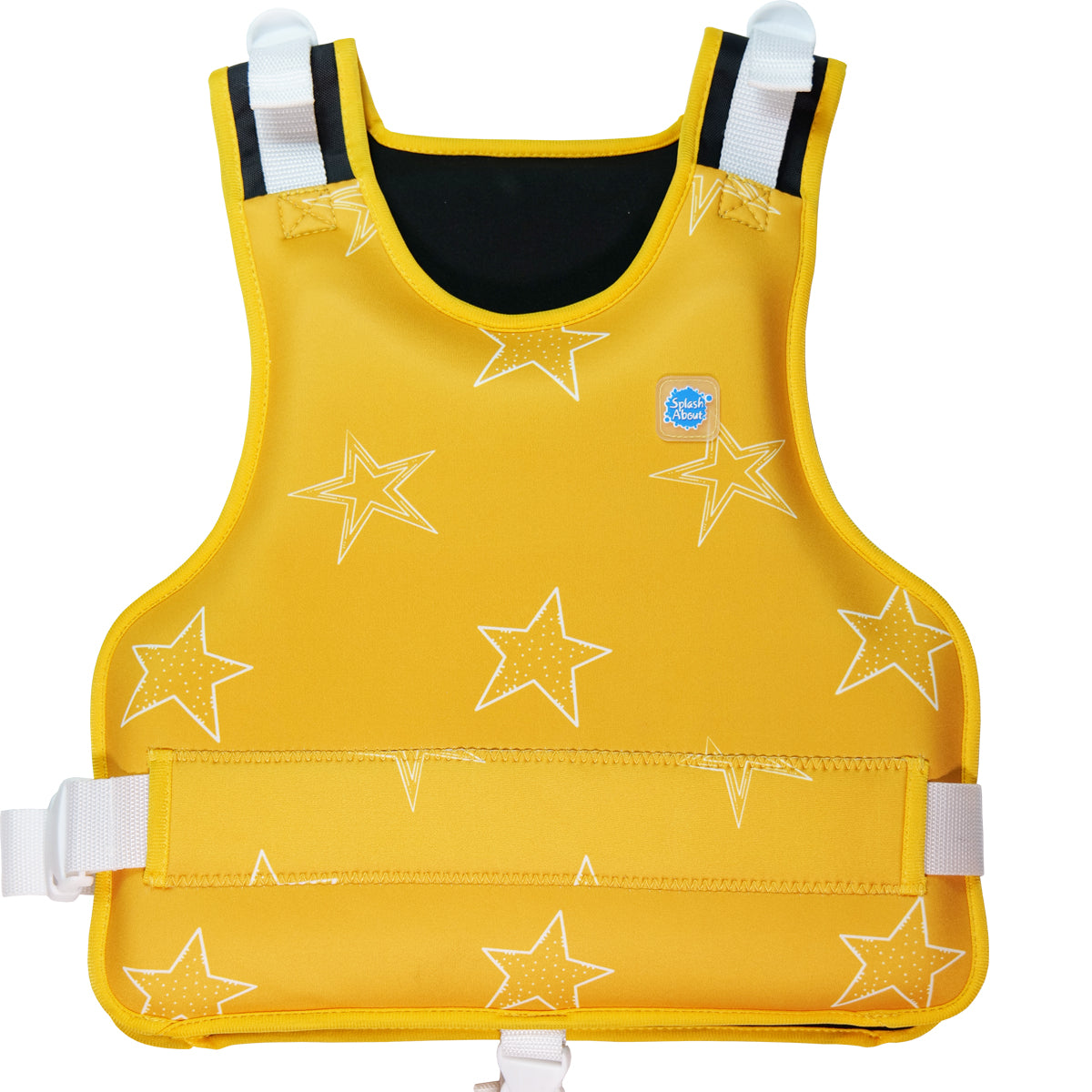
Our Adjustable Swim Vest Yellow Stars fits a chest of 24.4 to 29 inches and a weight of 66 to 132 lbs. That range starts exactly where the large size of our Go Splash Swim Vest finishes, so when your child outgrows their Go Splash, they can step straight into this one.
Younger swimmers start in the Go Splash from one year, in 16 designs, while the Go Splash Float Jacket covers ages one to six.
A Kids Swim Vest That Stays in Place
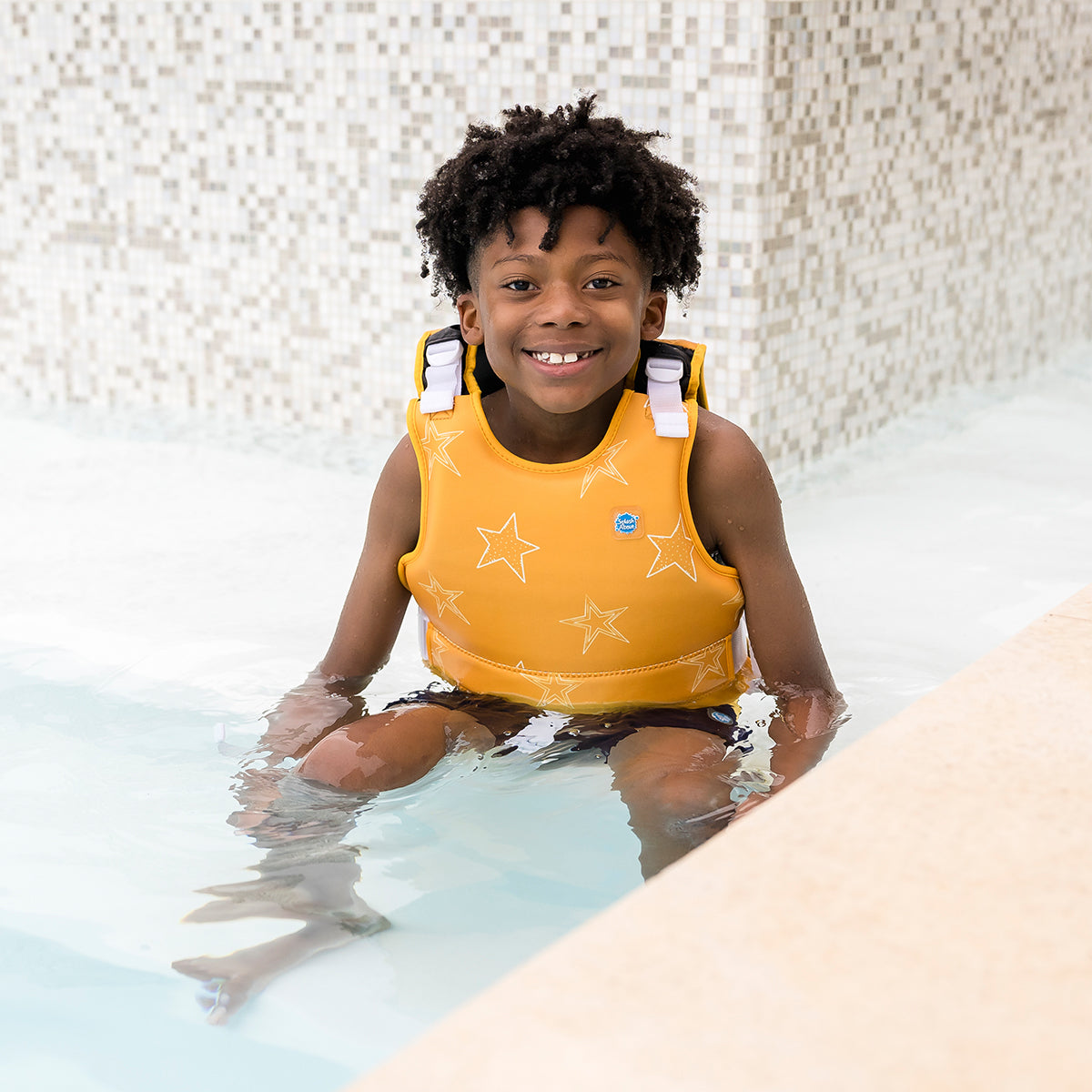
The vest slips over the head and clips shut with safety release buckles. Its shoulder and waist straps pull in for a snug fit and let out again as your child grows. A safety strap between the legs stops it riding up in the water, so the floats stay at your child's chest rather than drifting up around their ears.
Its slim, non-removable floats sit inside soft neoprene, so the vest packs flat in a suitcase or swim bag alongside any of our kids' swimwear.
The bright yellow makes your child easy to spot across the pool, which is one less worry on a busy day.
It's a learn-to-swim aid rather than a life jacket, so stay within arm's reach while they wear it


Frequently Asked Questions
Yes, for a child who's learning to swim. A swim vest adds enough buoyancy for them to practice kicking and arm strokes in a proper swimming position, which helps them feel braver in lessons and at the pool. It doesn't replace supervision, so an adult should stay within arm's reach the whole time.
A swim vest is a learning aid, while a life jacket is a safety device. US Coast Guard-approved life jackets are built to keep a wearer afloat, and some types turn them face up. On a boat or in open water, the American Academy of Pediatrics recommends a Coast Guard-approved life jacket.
It depends on the beach. Some ban life jackets outright and others allow Coast Guard-approved ones only. Where they're banned, operators often say a bulky jacket slows lifeguards down when they're treating a neck or back injury or starting CPR. A few beaches ban flotation of any kind, swim vests included, so check the rules before you go.
Swim vests support children while they learn to swim, giving them enough lift to kick and practice strokes without tiring as quickly. Families use them in swim lessons and on vacation.
Go by chest and weight rather than age. The best swim vest for your child is the one their measurements fall inside: our Adjustable Swim Vest fits a 24.4 to 29 inch chest and 66 to 132 lbs, and our size guide lists every vest we make. It should sit snugly, with no gap at the shoulders or waist.