
How to Keep Babies & Toddlers Warm During Winter Swimming Lessons
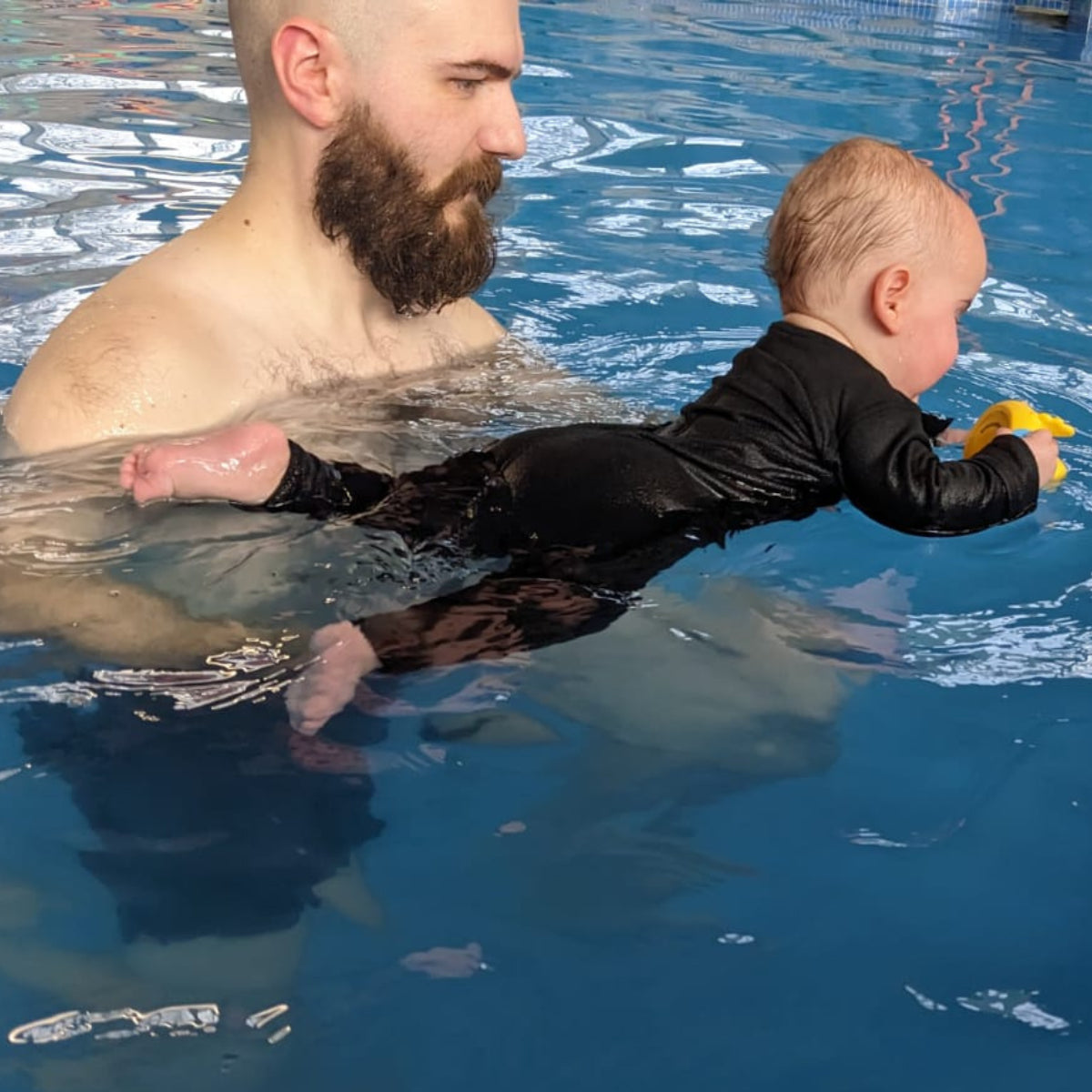
If you've ever stood in a chilly changing room, wet hair dripping, trying to keep baby warm during swimming lessons while your little one protests from the bench, you're in very good company. Winter lessons ask a lot of parents and carers, and they can be some of the loveliest swims of the year.
Estimated reading time 10 minutes
We've been making baby swimwear for over 20 years, and we've learned that most of what keeps a baby warm in winter happens outside the water. This guide walks you gently through a whole lesson, from your front door and back again.
In This Article:
- How Do You Keep Baby Warm During Swimming Lessons in Winter?
- Should Children Continue Swimming Lessons During Winter?
- Check How Warm Your Pool Really Is
- What You Need for a Winter Swimming Lesson
- Step 1: Choose a Wetsuit That Suits Your Pool
- Step 2: Get Yourself Changed First
- Step 3: Keep Them Low and Close in the Water
- Step 4: Get Out at the First Shiver
- Step 5: Wrap Them the Moment They Leave the Water
- Step 6: Dress Them Fully Before You Step Outside
- What Should Toddlers Wear to Winter Swimming Lessons?
- What If Your Baby Still Gets Cold in a Wetsuit?
- Can a Baby Overheat in a Wetsuit?

How Do You Keep Baby Warm During Swimming Lessons in Winter?
Dress them in a wetsuit matched to the pool's temperature, chosen from our baby wetsuits, with a swim nappy underneath. Keep them low in the water and snuggled close to you, lift them out at the first shiver, then wrap them within seconds and dress them fully before you head outside.
Each step is below, after a quick word on whether to keep going through the colder months at all.
Should Children Continue Swimming Lessons During Winter?
Yes, for most babies and toddlers we'd gently encourage it. Little ones build water confidence through regular practice. A long break from autumn to spring can mean starting your swimming journey again with a child who's forgotten how much they loved the water.
Winter lessons do take a bit more planning, and the cold is what puts many families off, though it's also the part you can do the most about. Once the bag is packed the same way each week, the routine soon becomes second nature, and a warm baby after a swim tends to feed well and sleep well too.
If your little one is unwell, it's fine to miss a week. Your swim school and health visitor can help you decide when they're ready to go back.
Check How Warm Your Pool Really Is
Babies lose heat much faster than we do, because they have more skin for their size and very little body fat to hold warmth in.
There's no legal minimum temperature for a UK swimming pool, so two lessons a mile apart can feel completely different to a tiny swimmer. The Swim England baby swimming checklist, part of a code of practice we were proud to help support, says pools should be at least 32°C for babies up to three months and 30°C for babies from three to twelve months.
Leisure centre pools are often cooler than that. Darlington Borough Council's Dolphin Centre, for instance, keeps its main pools between 28°C and 30°C, which is lovely for adults swimming lengths and a little brisk for a baby floating on their back.
Please don't feel awkward asking. Your teacher will know this week's reading, and once you have the number, you can use it like this:
| Pool temperature | What it usually means | What we'd put them in |
|---|---|---|
| Above 32°C | Warm hydrotherapy-style pool | A swim nappy and costume, no thermal layer |
| 30°C to 32°C | Most specialist baby classes | A neoprene wetsuit for babies who feel the cold |
| Below 30°C | Many leisure centre and learner pools | Our warmest fleece-lined suit and a swim cap |
Winter is when a cool pool is felt most, because your baby arrives already a little chilly from the journey.
What You Need for a Winter Swimming Lesson
Here's what we'd pack, ideally the night before so the morning feels calmer:
- a wetsuit or thermal suit chosen for your pool's temperature
- a Happy Nappy Duo™, which most UK swim schools accept on its own as a double nappy system
- a baby swim cap
- a hooded poncho towel, and a second towel for proper drying
- a neoprene changing mat
- a waterproof, fleece-lined after-swim suit for the journey home
- a woolly hat, clothes that go on quickly and a milk feed or snack
Pop the poncho and the dry clothes at the top of the bag, in the order you'll reach for them, because you'll be doing most of this one-handed with a damp, wriggly baby on your hip.

Step 1: Choose a Wetsuit That Suits Your Pool
Choose the suit for the pool rather than the weather outside. Baby wetsuits work by trapping a thin layer of water against the skin, which your baby's own body then warms. That's why a snug fit matters more than thickness, because a baggy suit lets cold water flush through every time they kick. Our fit guide shows how each one should sit.
For a cool leisure centre pool in January, we'd reach for the Warm In One™. It's our cosiest baby wetsuit, lined with soft fleece and with full-length sleeves and legs, in sizes from birth to two years. It isn't neoprene, so it's gentle to get on and off through its wide back opening, and it needs a Happy Nappy™ or Happy Nappy Duo™ worn underneath for a leak-free swim.
In a warmer specialist pool, an active baby is often happier in the Baby Wrap™. Made from 2mm neoprene, it hugs warmth around the core and leaves little arms and legs free to splash. If you'd rather have one garment, the Happy Nappy™ Wetsuit has the swim nappy built in and covers the top half of the body in 1mm neoprene.
None of these will help your baby float. They're there to keep them warm, and without one, many babies only manage about 10 minutes in the water before they've had enough.
Step 2: Get Yourself Changed First
Change into your own swimwear while your baby is still snug in their clothes, then do theirs last. Every minute a baby spends in a swimsuit on a cool poolside is warmth they won't have once they're in the water.
Put the wetsuit on in the changing room rather than at the pool edge, because a dry suit slides on far more easily than a damp one.
Try to be ready as the class before yours finishes, so you can step straight in together. If you're swimming with a partner or grandparent, one of you can change while the other cuddles the baby in a towel, which saves precious minutes in a busy changing room.
Step 3: Keep Them Low and Close in the Water
Keep your baby's shoulders under the surface for as much of the lesson as you can. Wet skin in the air loses heat much faster than skin under warm water. Lifting them up to see a toy or watch the teacher costs more warmth than anything they do in the pool.
When the teacher pauses to explain the next song, sink down to your own shoulders and hold your baby against your chest, where your body warmth helps them too. Gentle movement keeps them warmer than floating still, so walk them slowly through the water rather than standing in one spot.
A baby swim cap makes a real difference in a cool pool. Little heads lose a lot of warmth once their hair is soaked, and a soft cap keeps that wet hair from chilling them between activities.
Step 4: Get Out at the First Shiver
Lift your baby out the moment you notice they're getting cold, even if the lesson has twenty minutes left to run. Look for:
- shivering, or a chin that trembles
- lips turning pale or slightly blue
- going unusually quiet, or suddenly grizzly
- hands and feet that feel cold to your touch
Any one of these is your cue, and leaving early is always the right call. It helps to tell the teacher at the start of term that you might slip out early on cold days.
Toddlers are harder to read, because a happy two-year-old will insist they're fine through chattering teeth. Trust their lips over their words. If they're getting cold at the same point every week, build their time up over the first few weeks of term rather than staying in for the whole session from day one.
Step 5: Wrap Them the Moment They Leave the Water
Have a towel open and ready before you lift them out, because the first minute on the poolside is when babies lose heat fastest. A hooded poncho towel covers their head straight away and keeps drying them as you walk back to the changing room, leaving your hands free to hold them close.
Leave the wetsuit on until everything is laid out at the changing bench. A fleece-lined suit keeps working out of the water even when wet, so it holds warmth better than bare skin while you find the nappy and the vest.
Changing benches and tiled floors are cold, and they draw heat from a damp baby surprisingly quickly. Our neoprene changing mat is made from 3mm neoprene with a non-slip base, so it doesn't feel cold when you lay your baby down. It won Bronze for Best Changing Accessory/Product in the Mother&Baby Awards 2025.
Step 6: Dress Them Fully Before You Step Outside
Dress your baby before yourself, then settle them in the pram or car seat while you change. Dry their hair properly, including behind the ears and at the nape of the neck, because damp hair meeting freezing air outside undoes all the good work the wetsuit did.
Our Thermaswim baby and toddler suits are made for the pool, but their thin brushed fleece also works as a base layer under clothes. On a really cold day, a dry one makes a warm first layer for the trip home. Add a woolly hat, then our waterproof, windproof Splash Suit, whose fleece-lined hood keeps the wind off a head that may still be a little damp.
If you're driving, take the Splash Suit and any other puffy layer off before you buckle them in. RoSPA warns that thick clothing stops a car seat harness fitting properly, and if you can fit more than two fingers between your child's chest and the straps, they're too loose. Strap them in wearing thin layers, then tuck a blanket over the harness. A warm milk feed once you're settled is the perfect way to finish.
What Should Toddlers Wear to Winter Swimming Lessons?
Toddlers usually need a little less help in the water than babies, because they move more and make their own heat. They also spend more time waiting their turn on the step and are often taught in cooler learner pools, which is where they lose it again.
The Warm In One™ fits up to two years. After that, we'd reach for the toddler version of our Thermaswim suit, which has a brushed fleece lining and a full-length zip that makes it far easier to peel off a wet, wriggling child. It doesn't have a swim nappy built in, so a toddler who isn't potty trained still needs one underneath.
A cap matters even more at this age, since toddlers spend more time with their heads out of the water. You'll find caps and costumes in our toddler swimwear range.
What If Your Baby Still Gets Cold in a Wetsuit?
Please don't worry, because this happens to lots of families and there's usually a simple answer. Start by checking for gaps at the neck or wrists. A suit they've grown out of, or haven't quite grown into, will always feel cold, so it may be time for the next size up or down.
If the fit is right and they're still shivering, move up a level rather than adding layers underneath: from the Baby Wrap™ to the Warm In One™, with a swim cap if they aren't already wearing one. We don't recommend layering a Thermaswim under a wetsuit, as a warmer suit does the job better.
If none of that helps, the pool itself may simply be too cool for your baby right now. Ask your swim school whether a class runs in a warmer pool, and talk to your health visitor if your baby seems to feel the cold more than you'd expect.
Can a Baby Overheat in a Wetsuit?
Yes. Thermal swimwear isn't designed for hydrotherapy pools or any pool heated above 32°C, because in water that warm it could lead to your baby overheating.
The same applies after the lesson, since a warm changing room and a fleece-lined suit can tip a baby who's just been active from cosy to too hot. Take the wetsuit off once you're ready to dress them, and if your baby feels hot rather than warm, remove a layer.
Ready for Your Next Winter Lesson?
Keeping a little one warm through the winter comes down to a handful of small habits, repeated each week, and most of them happen in the ten minutes either side of the lesson rather than in the pool itself. Get those right and the water becomes the easy part.
Be gentle with yourself while you find your rhythm. Some weeks your baby will splash happily from the first song to the last, and other weeks they'll be ready to come out after ten minutes. Both are completely fine, and every lesson still counts towards their confidence in the water.
If you swim in a cool leisure centre pool, our Baby Cold Pool Lessons Bundle brings the warmest pieces together in one place: the Warm In One™, a Happy Nappy Duo™ and a soft swim cap. If you're still not sure which suit is right for your pool or your baby, get in touch with our team. We're always happy to help you find the right fit, so you can both look forward to the next lesson.


