
Thermal Swimwear vs Wetsuits: Which Is Best for Swimming Lessons?
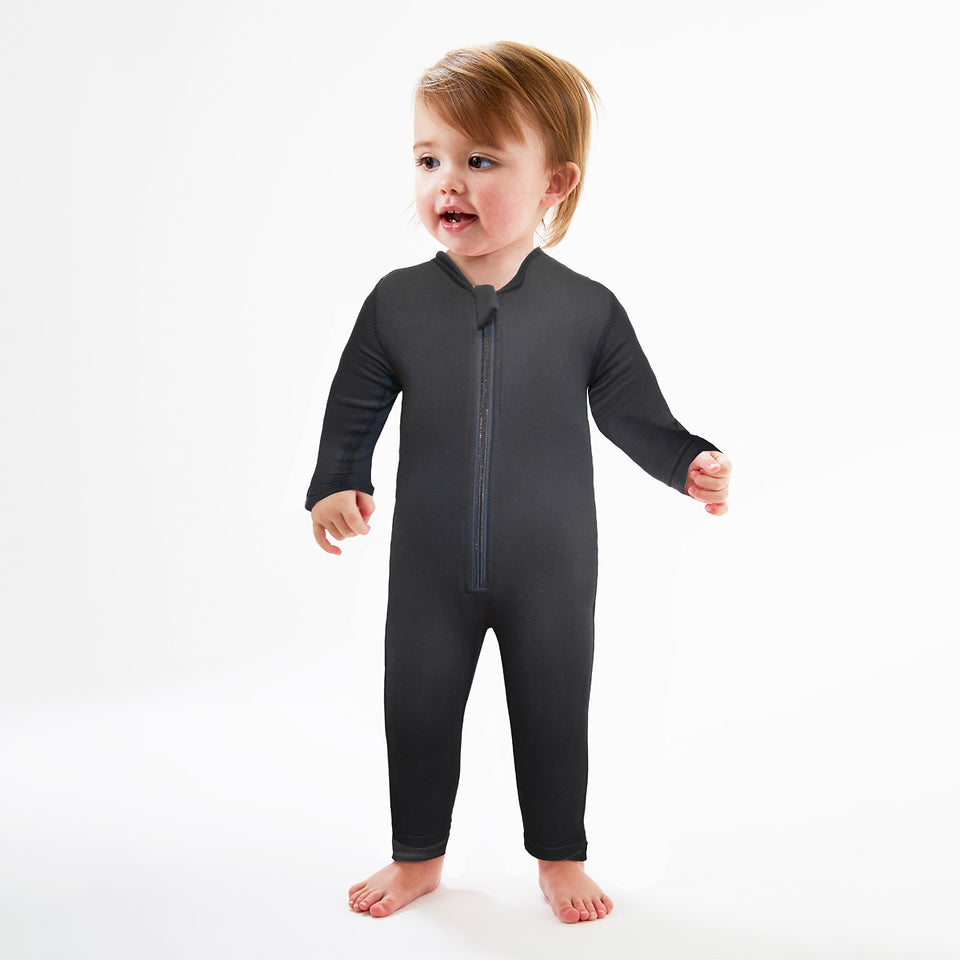
Getting ready for your baby's first swimming lesson is exciting, and thermal swimwear vs wetsuit is a lovely question to be asking, because a warm baby is a happier, more settled swimmer. The two look alike on the hanger. What separates them is how much warmth they give, and how they sit around the swim nappy.
Estimated reading time 8 minutes
This guide is for parents and carers choosing between our Thermaswim suits and our wetsuits for lessons. By the end, you'll know which suit fits your baby and how it works with the swim nappy your teacher asks for. Whichever you choose, you're giving your baby a cosier start in the water.
Thermal Swimwear or a Wetsuit: The Quick Answer
It mostly comes down to how easily your baby gets cold, which you'll know better than anyone:
- Choose the Thermaswim Baby Suit or Thermaswim Toddler Suit if your pool is pleasantly warm and you'd like a stretchy suit that zips off easily and doubles as a base layer.
- Choose the Warm In One™ if your baby feels the cold easily or your pool runs on the cool side, because it's our warmest baby wetsuit.
- Choose the Happy Nappy™ Wetsuit if you'd like warmth and faecal leak protection in a single piece.
- Choose the Baby Wrap™ for a wriggly baby who protests at every sleeve, or the Shorty Wetsuit once your child is between two and six.
What Is Thermal Swimwear?
Thermal swimwear is a close-fitting swimsuit lined with brushed fleece, and ours is the Thermaswim range. It traps a thin layer of water between the fleece and your baby's skin, and their own body heat warms that layer. That's what keeps them comfortable as the lesson goes on, and parents who've tried Thermaswim tell us it stops the shivering during their baby swimming sessions.
The fabric is a polyester and elastane mix with four-way stretch, so it moves with a baby who's kicking hard or being passed between grown-ups.
The baby suit has long sleeves and legs, while the toddler suit has 3/4 length legs. Both have a full-length zip, and because they're thinner than our Warm In One™, they work as a base layer under clothes on a cold walk home.
Neither has a swim nappy built in, so your baby wears a Happy Nappy™ or Happy Nappy Duo™ underneath. If you'd like the detail on how the fleece works, our guide to Thermaswim thermal swimwear covers it.
What Is a Baby Wetsuit?
A baby wetsuit works on the same principle, letting a thin layer of water in and warming it with body heat. The difference is the material around that layer. Most of ours are neoprene, the stretchy, insulating fabric you'll know from surfers' wetsuits, and it gives you extra grip when you're holding a wet, slippery baby.
We make four, each for a slightly different baby:
- Warm In One™: a fleece lining inside a flexible outer we use in place of neoprene, with full-length sleeves and legs. It's our warmest baby wetsuit.
- Baby Wrap™: 2mm neoprene around the core only. It opens completely flat, and its adjustable fastenings mean one size may fit your baby for over a year.
- Happy Nappy™ Wetsuit: 1mm neoprene with a Happy Nappy™ built in, fitted snugly at the waist and thighs to hold in solids.
- Shorty Wetsuit: 2mm neoprene with short sleeves and legs, designed for children aged two to six who are moving on from baby wetsuits.
The Happy Nappy™ Wetsuit is the one with a swim nappy built in. The other three go over a separate swim nappy, just like thermal swimwear.

Thermal Swimwear vs Wetsuit at a Glance
Here's how they line up:
| Thermaswim | Warm In One™ | Baby Wrap™ | Happy Nappy™ Wetsuit | Shorty Wetsuit | |
|---|---|---|---|---|---|
| Material | Brushed fleece (polyester and elastane) | Fleece lining, flexible outer | 2mm neoprene | 1mm neoprene | 2mm neoprene |
| Coverage | Long sleeves and legs (baby), 3/4 legs (toddler) | Full-length arms and legs | Core only | Upper body, with built-in nappy | Short sleeves and legs |
| Swim nappy built in | No | No | No | Yes | No |
| Getting it on and off | Full-length zip | Easy on and off | Opens completely flat | Snug, rolls on like tights | Easy on and off, even when wet |
For most families, the coverage and swim nappy rows settle it: one tells you how warm your baby will be, the other what goes on underneath.
Which Keeps Your Baby Warmer?
The Warm In One™ wins on warmth, and by a clear margin if your baby feels the cold easily. It's our warmest baby wetsuit, with a fleece lining and full-length sleeves and legs, and it's a firm favourite with parents of chilly babies. That full coverage also helps keep barrier creams in place, which you'll appreciate if your baby has dry or sensitive skin.
Thermaswim is the lighter option, for a pool where your baby only needs a little help staying warm. It shouldn't be worn in hydro pools or water heated above 32°C, where it could make your baby too hot.
The neoprene suits focus on the core. The Baby Wrap™ uses 2mm neoprene to help your baby regulate their temperature, while the Happy Nappy™ Wetsuit uses super-soft 1mm neoprene over the upper body. For older toddlers, the Shorty Wetsuit brings the same 2mm neoprene as the Baby Wrap™ to the chest and back, with short sleeves and legs.
There's no legal minimum temperature for a swimming pool, so it varies from pool to pool. If you're not sure how warm yours is, ask your swim teacher before you buy; they'll be glad you asked, and they'll usually know whether babies in their class get chilly by the end.
Our guide to keeping your child warm in a swimming pool has more on cooler pools.
Which Is Easier to Change at the Poolside?
The Baby Wrap™ and Thermaswim are the easiest, for different reasons. The Baby Wrap™ opens completely flat, so there are no sleeves to thread a wriggling arm through. Thermaswim has a full-length zip and enough stretch to come off easily, even when it's wet.
The Happy Nappy™ Wetsuit asks the most of you. It fits snugly, because the nappy inside has to seal at the waist and thighs, so it can be tricky to put on at first. Rolling it on like a pair of tights, one leg at a time, helps.
The Warm In One™ and the Shorty Wetsuit are both easy to get on and off. The Shorty comes off easily even when wet, which you'll be grateful for with a cold toddler in a busy changing room.
Which Works Best With Swim School Nappy Rules?
The Happy Nappy™ Wetsuit is the simplest, because it's the only suit here with a swim nappy built in. For general swimming you won't need anything else underneath. Some organised classes ask for a double nappy system, though, and then you'll add a nappy wrap such as our Silver Lining Nappy Wrap underneath.
Every other suit here goes over a separate swim nappy: a Happy Nappy™ or Happy Nappy Duo™ under Thermaswim, the Warm In One™ or the Baby Wrap™, and a swim nappy under the Shorty Wetsuit for any child who isn't toilet trained yet.
It helps to know what the swim nappy is doing in there. A Happy Nappy™ holds in faeces and stops leaks into the pool. It lets water pass in and out so it doesn't get heavy, which also means it doesn't hold urine, so pop your baby into a regular nappy as soon as they're out of the water.

Which Gives Your Baby More Freedom to Move?
Thermaswim wins here, because its four-way stretch fabric moves in every direction with your baby. The Baby Wrap™ comes a close second by leaving arms and legs uncovered. That freedom matters more as babies get stronger and start reaching for the side of the pool.
The Warm In One™ is made from a more flexible material than traditional neoprene, so its full coverage still flexes with your baby. Older toddlers get room to kick in the Shorty Wetsuit, with its short sleeves and legs, while the Happy Nappy™ Wetsuit sits closest of all, because its built-in nappy needs that snug fit.
The trade-off is coverage. The Baby Wrap™ keeps only the core warm, which suits an active baby in a warm pool. A baby whose arms and legs get chilly is better off with full-length sleeves.
What About Toddlers Moving On From Baby Wetsuits?
If your child is two or older, the Shorty Wetsuit is designed for exactly that stage. It's 2mm neoprene with short sleeves and legs, which suits pools and outdoor water above 20°C.
The Thermaswim Toddler Suit is the lighter choice for an active toddler, with plenty of stretch for climbing out and jumping back in.
Which Should You Choose?
Trust what you already know about your baby. The thermal swimwear vs wetsuit choice starts with how warm your pool is, so work out from there. If your pool is warm and your baby is happy in an ordinary swimsuit, you may not need either yet, because neither a wetsuit nor thermal swimwear is compulsory for baby swimming.
If your baby shivers easily or your pool runs cool, the Warm In One™ is the one we'd pick, with a Happy Nappy™ or Happy Nappy Duo™ underneath. If you'd rather manage one piece and your class doesn't ask for a double nappy, the Happy Nappy™ Wetsuit keeps your kit bag simple.
Thermaswim makes most sense in a pleasantly warm pool, and it's useful again on a cold day out under clothes. It also sits at the more affordable end of our warm swimwear, because it's made without the Warm In One™'s outer layer.
For a baby who wriggles through every change, the Baby Wrap™ saves a lot of sleeve-wrestling, and once your child turns two, the Shorty Wetsuit takes over.
What Should My Baby Wear to Swim Class?
A swim nappy first, then a warm layer over it if your pool or your baby needs one. Swim schools generally ask for a swim nappy, and some ask for a double nappy system, so check your class's rules before you buy. Our guide to the best swimwear for your baby's first swim class covers the rest of the kit bag.
Does a Wetsuit Help My Baby Float?
No. Neoprene is slightly buoyant, but not nearly enough to keep a baby afloat. A wetsuit is there for warmth and grip, so keep your hands on your baby just as you always would. That closeness is half the joy of these early lessons.
Ready for Your Baby's First Lesson?
Warmth decides most of this choice. Thermaswim suits a pleasantly warm pool, while a wetsuit is the better pick for a cooler pool or a baby who feels the cold.
Whichever suit you choose, those first lessons are about your baby getting used to the water in your arms, and a warm, comfortable baby usually settles into it far more happily. You can browse all our baby wetsuits side by side, and if you're not sure which suit is right for your baby or your swim school's rules, get in touch with our team and we'll happily help you choose. Enjoy those first splashes together.


