
The Complete Guide to Children's Thermal Swimwear, from Newborn to Six
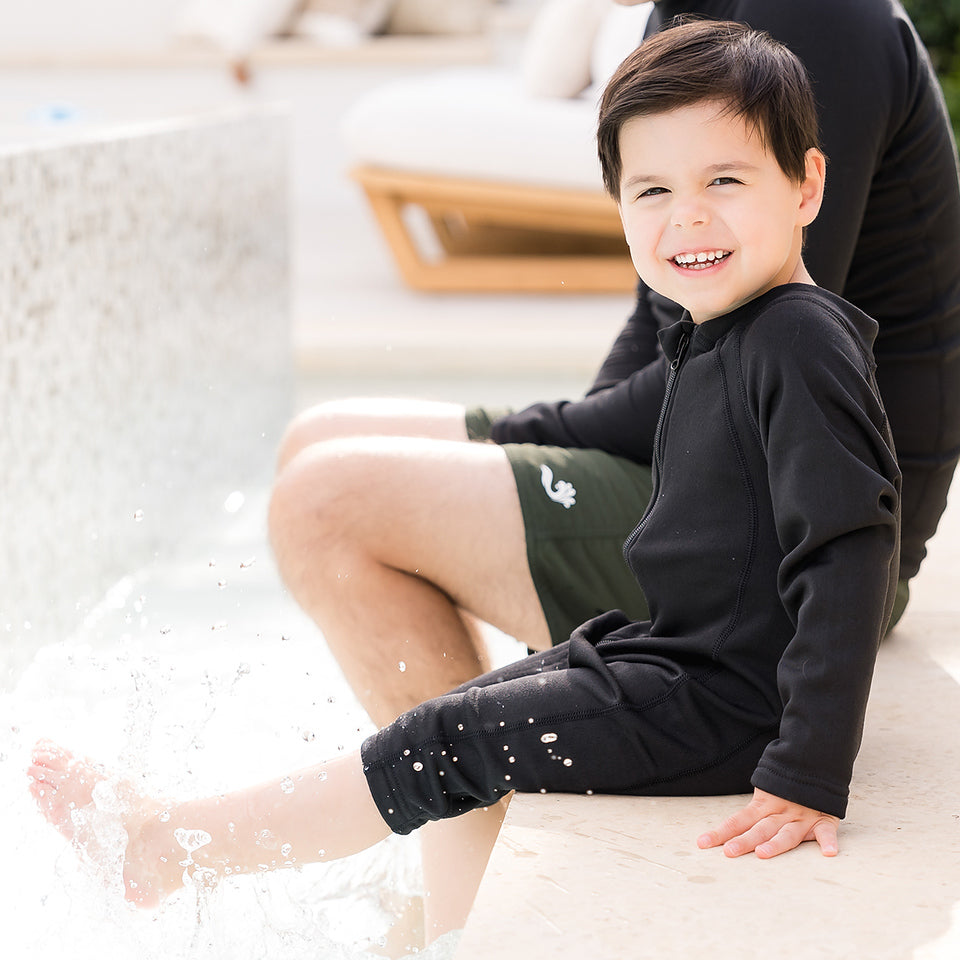
Most parents start looking at children's thermal swimwear after the same moment: ten minutes into a lesson, their baby's lips go pale and the bottom lip starts to wobble. It's a hard moment to watch, and it doesn't mean they dislike the water. Usually they're simply cold, which is one of the easiest things in baby swimming to put right.
Estimated reading time 7 minutes
This guide explains how a warm suit works, which pools call for one and how to choose between neoprene and fleece for your child's age. We've made baby wetsuits since 2005, so we'll gently walk you through which of ours we'd choose for each situation and be honest about where one isn't the right fit.
In This Article
- How Does Thermal Swimwear Keep a Child Warm?
- Thermal Swimwear for Newborns and Chilly Pools
- Infant Wetsuits for Wriggly Babies and Quick Changes
- Warm Suits for Toddlers in Swimming Lessons
- Warm Wetsuits for Beach Days and Holidays
- Choosing the Right Children's Thermal Swimwear for Your Child's Age and Pool

How Does Thermal Swimwear Keep a Child Warm?
Thermal swimwear works by trapping a thin layer of water between the fabric and your child's skin. Their body heats that layer, and because the suit stops it washing away, they stay warm for longer than they would in an ordinary costume.
That matters more for your baby than for you. Little bodies lose heat much faster than ours do, so without a wetsuit a baby may only manage up to 10 minutes in the water before they've had enough. That's no sign they're doing badly.
What pool temperature does a baby need?
Does your baby need a thermal swimsuit at all? Not always, and you don't have to guess, because the pool usually decides it. The NHS says you can take your baby swimming from a very young age, with no need to wait for vaccinations. The water temperature is the thing worth checking. The Swimming Teachers' Association asks for warmer water for babies than for a normal public session, and our own suits have a ceiling too:
| Who's swimming | Pool water temperature | What that means for you |
|---|---|---|
| Babies under 3 months, or under 5.5kg (12lb) | 32°C (STA) | Look for a dedicated baby session, and a warm suit still helps |
| Older babies and toddlers | At least 30°C (STA) | A typical learner pool, and the range where a warm suit makes the biggest difference |
| Hydro pools heated above 32°C | Too warm for our thermal suits | Leave the suit at home, because there's a real risk of overheating |
It's always fine to ask the pool for its water temperature before you buy anything, because that one number tells you how much warmth your child will need.
Which material is warmest?
There's no warmth rating for swimwear, so the material is the next best guide. Here's how the fabrics in our range compare:
| Material | How it feels | Where it works best |
|---|---|---|
| 1mm neoprene | Soft and flexible, light warmth | Warm learner pools, sunny holidays |
| 2mm neoprene | Thicker, firmer, more core warmth | Cooler pools and the British seaside |
| Brushed fleece | Stretchy and close-fitting, with a soft fleecy inside | Indoor lessons, and as a base layer under clothes |
| Fleece lining with a TPU layer | Full body, loose and cosy | The coldest pools and babies who chill fastest |
One thing a wetsuit won't do is keep your baby afloat. Neoprene is slightly buoyant, but not enough to support a baby, so keep your hands where they've always been, gently supporting your baby.
Thermal Swimwear for Newborns and Chilly Pools
If your baby is very young, or the pool you use sits at the bottom of the STA range, coverage matters as much as thickness. Small arms and legs lose heat fast, and a suit that covers them from wrist to ankle keeps far more of that warm layer in place, so your baby can relax and enjoy those first swims with you.
The Warm In One™ is the warmest suit we make. It's fleece-lined with full-length sleeves and legs, and the cuffs at the wrists and ankles hold barrier creams in place, which helps if your baby has sensitive skin. It's a looser fit than our neoprene suits, which makes it the snuggliest choice for a baby who doesn't like feeling held in.

The Thermaswim Baby Suit is the lighter alternative: a close-fitting, brushed fleece all-in-one with a full-length zip. It's designed to give enough warmth for an indoor baby swimming session on its own, and it doubles as a base layer under clothes on chilly days.
Does a thermal suit replace a swim nappy?
No. Neither suit contains a swim nappy, so your baby still needs a Happy Nappy™ underneath, because the suit keeps them warm and the Happy Nappy™ is what contains faeces and stops leaks into the pool.
We recommend: the Warm in One™ Shark Reef, the Thermaswim Baby Suit
Best suited to: newborns in 32°C baby sessions, older babies in pools nearer 30°C and any baby who gets cold quickly or has sensitive skin.
Infant Wetsuits for Wriggly Babies and Quick Changes
Neoprene infant wetsuits trade some coverage for freedom. They keep the core warm and leave arms or legs free to kick. That tends to suit a baby who's past the newborn stage and wants to move.
Thickness is the spec to check here. Our Baby Wrap™ is 2mm neoprene around the body only, so it gives the most core warmth of our baby neoprene suits while leaving arms and legs free. It opens completely flat: you lay your baby on it, fold the sides up and fasten the straps, which makes changing a little calmer when they won't lie still. The straps adjust, so one size fits for several months.

What if you'd rather skip the separate swim nappy?
The Happy Nappy™ Wetsuit is thinner at 1mm, but it has a full Happy Nappy™ built in. The waist and thigh cuffs fit snugly to form a seal that holds in solids, so you don't need a separate swim nappy. It can feel fiddly the first time, and that's completely normal: roll the top half down and put the legs in one at a time, like tights. It soon becomes second nature.
Most swim schools ask for a double nappy system, so check with yours; if they do, add a nappy wrap underneath the Happy Nappy™ Wetsuit.
Whichever you choose, fit decides how warm it keeps your baby. Our fit guide shows how snug each suit should sit, because a loose wetsuit lets cold water flush straight through.
We recommend: the Baby Wrap™ Shark Reef, the Happy Nappy™ Wetsuit Shark Reef
Best suited to: active babies from a few months old, parents who want quick changes on a cold poolside and lessons where an all-in-one nappy and wetsuit saves a step.

Warm Suits for Toddlers in Swimming Lessons
Toddler lessons usually involve a lot of waiting: on the step, at the side, for a turn with the float. That's when children chill, because they're wet and not moving, and a cold, shivery three-year-old finds it hard to enjoy the lesson, let alone listen.
The Thermaswim Toddler Suit keeps them cosy through those waiting moments. It's brushed fleece, knee-length with three-quarter sleeves, so arms are free for paddling while the body stays covered. The full-length zip and stretchy fabric make it easier to peel off a wet, tired toddler at the end of a busy lesson. It comes in sizes for 2 to 4 and 4 to 6 years.
Fleece or neoprene for a toddler?
If your child would rather be in a proper wetsuit, our Shorty Wetsuit is 2mm neoprene with a front zip, in the same 2 to 6 sizes. It suits a child who's moved on from baby wetsuits, and it earns its keep again at the beach.
We recommend: the Thermaswim Toddler Suit, the Shorty Wetsuit Shark Reef
Best suited to: children aged 2 to 6 in weekly lessons, especially in cooler learner pools where a lot of the session is spent standing still.

Warm Wetsuits for Beach Days and Holidays
The sea brings its own challenges. In Britain it's usually colder than any pool, and abroad it's often sunnier. A beach suit needs to handle wind and sun as well as water.
The UV Sun & Sea Suit mixes a 1mm neoprene body with soft fabric sleeves and side panels, so it keeps the core warm without the stiffness of a full wetsuit. The high neck covers the neck, back and shoulders, the areas most exposed to the sun, and the suit carries UPF 50+ sun protection. Sizes start at 1 to 2 years, so it bridges the gap between baby wetsuits and the Shorty.
Which suit is warmest for a British beach?
The 2mm Shorty is the warmer choice. Its neoprene is naturally windproof, which matters when your child comes out of the sea into a breeze.
Look after either suit (a fresh-water rinse after every swim, then dry it inside out away from direct heat) and it'll last 2 to 3 years, so most children outgrow it before it wears out.
We recommend: the UV Sun & Sea Suit Shark Reef, or browse our full kids wetsuit range
Best suited to: children from 1 to 6 on sunny holidays and rock-pooling days where sun protection matters as much as warmth.
Choosing the Right Children's Thermal Swimwear for Your Child's Age and Pool
Start with the pool temperature, then your child's age. A baby under three months needs a 32°C pool and full coverage; a four-year-old at the seaside needs neoprene and sun cover; nobody needs a thermal suit in a hydro pool. Here's every suit from this guide side by side:
| Suit | Age range | Material | Coverage | Best suited to |
|---|---|---|---|---|
| Warm In One™ | 0 to 2 years | Fleece lining with TPU | Full body | The coldest pools, sensitive skin |
| Thermaswim Baby Suit | 3 months to 2 years | Brushed fleece | Full body | Indoor baby lessons, base layer |
| Baby Wrap™ | 0 to 18 months | 2mm neoprene | Core only | Wriggly babies, fast changes |
| Happy Nappy™ Wetsuit | 0 to 2 years | 1mm neoprene | Upper body plus built-in nappy | Lessons and holidays without a separate swim nappy |
| Thermaswim Toddler Suit | 2 to 6 years | Brushed fleece | Knee-length, three-quarter sleeves | Weekly lessons in cooler pools |
| Shorty Wetsuit | 2 to 6 years | 2mm neoprene | Short arms and legs | Cool pools, British beaches |
| UV Sun & Sea Suit | 1 to 6 years | 1mm neoprene with fabric panels | Fabric sleeves, high neck | Sunny holidays and active play |
For most families, the age column narrows it to two suits and the pool settles the rest. Whichever you choose, remember that every suit except the Happy Nappy™ Wetsuit needs a swim nappy underneath until your child is potty trained.
The questions parents ask us haven't changed much over the years: will my little one be warm enough, and will it fit? They're exactly the right questions to ask. If you're not sure which size or suit your child needs, get in touch with our team and we'll happily help you find the right fit for your child's swimming journey.


